




(Version française) (Versión en español)
Xunan Ka’ab – The Sacred Bees of the Mayas
Introduction
We are all familiar with beekeeping—the raising of honey bees. Apiculture is the formal, scientific term. The word comes from the scientific name for this bee: Apis mellifera. In Mexico, on the Yucatan Peninsula, the bees that the Mayas have been keeping for over 2,500 years are Melipona beecheii (Xunan Ka’ab in Maya, meaning "Noble Lady of the Honey"). Therefore, it is referred to as meliponiculture. Unfortunately, these small stingless bees were largely replaced by European honey bees, which produce higher quantities of honey. In fact, a study covering eleven populated areas in the Maya lowlands revealed a rapid decline in both the number of meliponicultors and the average number of colonies. In a sample of 24 meliponicultors from the Zona Maya in Quintana Roo, the number of domesticated Melipona beecheii colonies dropped from 755 in 1981 to just 90 in 2004—a decrease of more than 93%. Today, however, there is a revival underway in Maya villages, where small artisanal hives housing native bees are becoming increasingly common.
These bees do not construct honeycombs. Instead, they build wax architectural structures forming small storage pots for honey and pollen. Their honey is quite distinct—runnier, citrusy, and deeply flavorful. It also does not tend to crystallize.

The first time I had the privilege of witnessing a hive being opened was in 2022 at the small hotel Genesis, a beautiful retreat lodge in the peaceful village of Ek Balam, where we have often stayed. Our long-time friend Guadalupe Ay Balam was getting ready to do her routine maintenance for the 6 small hives set up at the hotel in 2019. When she removed the lid, it was love at first sight! The intricate architecture of the brood and honey pots, the constant movement of the bees, and the delicate scent filling the air captivated me immediately. With my macro camera in hand, I took hundreds of photographs..
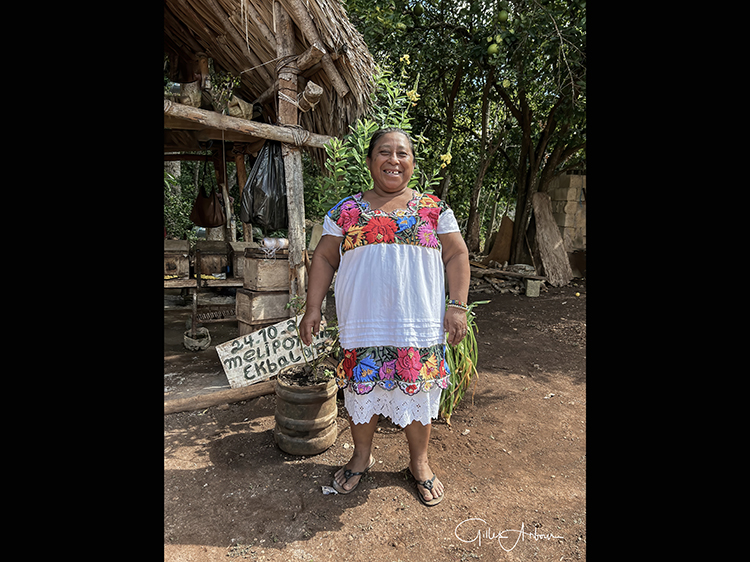
Following that experience, I had the opportunity to visit dozens of meliponaries (apiaries) connected with the Mayan Melipona Bee Sanctuary Project in the Valladolid region starting in 2023. I was granted permission to photograph the hives as they were opened for honey harvesting or cleaning. Over the years, I have taken more than 7,000 photos documenting various aspects of the life of these bees and the passionate families who care for them. In 2025 and 2026, I had the opportunity to display a curated exhibition of my photos that was presented on several occasions in Mexico.

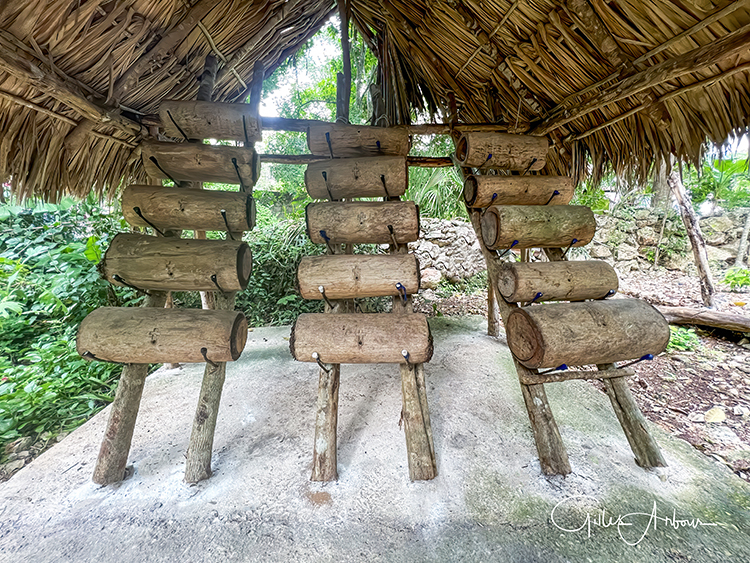
I have been traveling to Mexico since 1971, and almost exclusively to the Yucatan Peninsula since 1986. Together with my wife Guylaine, who shares my love for nature, we have explored all three states of this region: Quintana Roo, Yucatan, and Campeche. In the small pueblos away from tourist routes, we often purchased what was sold as "Maya honey," long before realizing it came from native bees. We loved its flavor, aroma, and delicate sweetness. In the early 1990s, while visiting the botanical garden in Puerto Morelos, we saw jobones (traditional log hives made from hollow tree trunks) for the first time. That was the moment we understood that keeping Melipona beecheii bees has been deeply woven into Maya life for centuries.
These bees are an integral part of Maya history and mythology. Still today, ceremonies are held to seek protection from Ah Mucen Cab, the Maya deity of bees. A depiction of this mythical entity, often carved on a wooden plaque, can frequently be found at the entrance or above the meliponary.
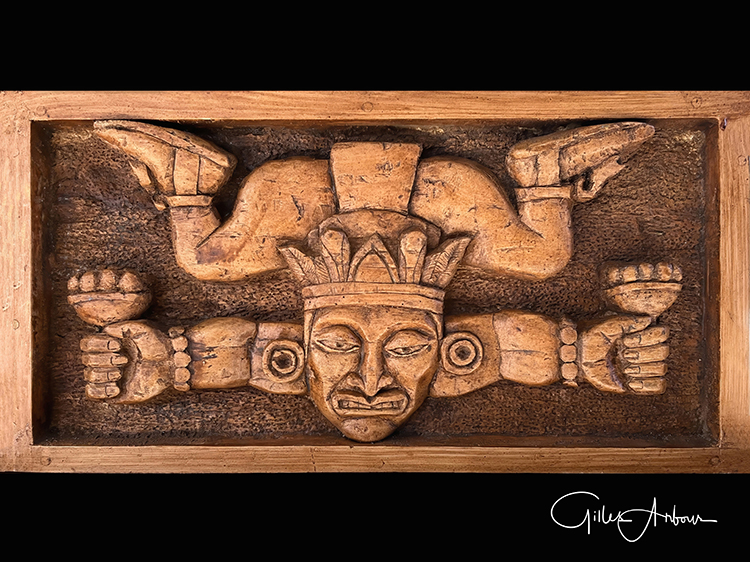
These native pollinators rely on nectar-and pollen-bearing plants to survive, and the plants depend on their presence to reproduce; neither can thrive without the other. The health of the bees is directly linked to the health of their habitat. While this concept is widely recognized, it becomes tangible when measured simply by the amount of honey a hive produces. In a healthy, undisturbed environment, a hive can produce at least 1 liter of honey per year. In a degraded habitat, however, a hive may struggle to yield even half a liter. The factors behind this drop are manifold: urbanization, deforestation, intensive agriculture, and widespread pesticide use.

While this impact has been known for a long time, it is not always easy to observe directly. In the meliponaries around Valladolid, however, the contrast is immediately apparent. In Chichimilá, virtually surrounded by dense jungle and an abundance of native flora, the hives are thriving and full to capacity, yielding exceptional honey harvests. In contrast, right in the heart of downtown Valladolid, honey production decreases by about 50%. In other areas, maintaining hives is no longer possible due to a scarcity of flowering plants. Any effort to protect stingless bees in the Yucatan inherently requires protecting the ecosystem to which they belong. The richness of a habitat's biodiversity is the true guarantee of healthy and viable bee colonies.
In this series of articles dedicated to the world of native stingless bees in the Yucatan, I invite you to explore the cultural, ecological, economic, and behavioral aspects of these fascinating little insects.
___________________________
References Consulted for This Article
- Extinction of Melipona beecheii and traditional beekeeping in the Yucatán peninsula
Rogel Villanueva-G, David W. Roubik, and Wilberto Colli-Ucán. Bee World 86(2): 33–41 (2005). - Mayan Melipona Bee Sanctuary Project: mayanmeliponabee.org
- Photo Exhibition: Flickr Album
- Genesis Eco-Oasis Ek Balam https://genesisecooasis.com
Header Photo: Melipona beecheii (Xunan Ka’ab) in flight carrying pollen. Meliponary Santuario de la abeja melipona. Valladolid, Yucatán, Mexico.


